
The real story behind the big balm
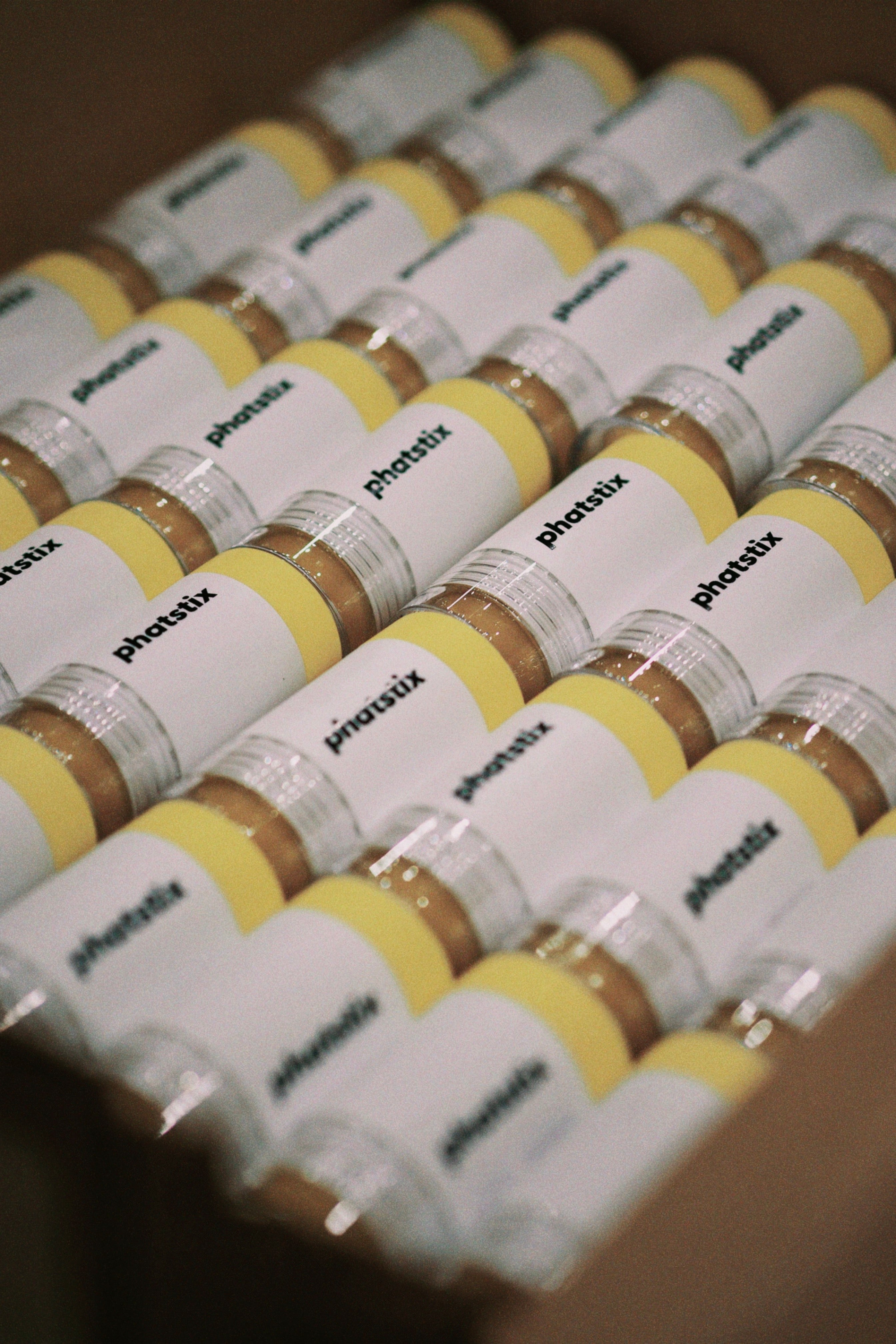
Phatstix is an independent British brand making a 30g balm for lips, faces and dry places. That is about seven times the size of a standard lip balm, and one stick lasts up to a year.
It is made in England and formulated in Yorkshire with a doctor-led lab. It started somewhere fairly personal: my own eczema, a difficult health period, and a kitchen experiment that got out of hand. The ingredients are 100% natural, the price is fair, and the mascot is a skull called Cheekbonez. There is no lifestyle to buy into and no philosophy to sign up to. It is a properly made balm, by someone who got fed up with the ones that weren't.


Why a lip balm expert had a drawer full of ones that didn't work
I'm Thom Watson. I started in beauty at 16 and have spent nearly two decades in it: The Body Shop first, then a men's skincare blog called MANFACE, and training as a beauty therapist along the way. I know more about lip balms than is probably healthy.
I also have eczema. My lips and skin have always needed more than a quick swipe of something waxy, and over the years I built up a drawer's worth of balms. The nourishing ones vanished inside a week. The long-lasting ones sat on top like cling film. The expensive ones were mostly packaging and the cheap ones were mostly petroleum.
Every few months I would buy another one, and it would join the rest.
That is what Phatstix is the answer to. The existing options weren't good enough, and I knew enough to make something better.


Why make it during a difficult health period
A few years ago I had a health scare. I won't go into the details, but it was the kind of thing that makes you think clearly about what you want to do with your time.
While I was at home recovering I started making balms in the kitchen, as Christmas presents to begin with. It took about fifteen goes before I had something I was genuinely proud of: no water, no synthetics, no artificial preservatives, no petrochemicals. Beeswax, butters and oils. I gave them to people I cared about and they kept using them. A year on, my mum was still on the same stick.
That was enough to take it seriously. I partnered with Here2Grow, a doctor-led cosmetics lab in Yorkshire, went through more trial formulations, and got the product right.


What is Cheekbonez?
Every order ships with a Cheekbonez pin. Cheekbonez is the brand mascot and he is a skull, but he is not here to be edgy. He is here because something good came out of a rough patch, and that is part of how this brand exists at all.
There is an encouraging message on the back of every pack. Nothing preachy, just a small reminder most of us need now and then. The pin and the sweets in every order are the same idea: this was made by a person, and the parcel should feel like it.
Why one big balm instead of twelve small ones
Most people get through around a dozen lip balms a year, and hardly any of them get finished. They go through the wash, vanish into bags, get replaced on impulse, and leave a drawer of three-quarter-full tubes behind.
Phatstix is 30g. A standard lip balm is about 4.25g, so The Balm is roughly seven times bigger, 7.06 times if you want the exact figure. It is a twist-up stick you actually use rather than a pot you dig into and forget, and one lasts up to a year.
At £24 for 30g that works out at about 80p a gram, and it is 100% natural, which the budget ones are not.
One purchase a year, that works.


Ey up! We're Made in Yorkshire
What we actually believe
Quality first. Every ingredient is in there because it does something. Beeswax protects, shea nourishes, jojoba balances. Fifteen formulations before we were happy. No fillers, no water.
Honest pricing. The Balm costs what it costs to make well and pay people properly, plus enough margin to keep the lights on. Not whatever the market will bear.
No marketing nonsense. No claims we can't back, no pseudoscience, no wellness language designed to make you feel like you are missing something. The ingredient list is the argument.
Pragmatic about sustainability. One balm lasting a year replaces roughly seven to twelve small tubes, so it uses less plastic than repeat-buying little ones. The outer sleeve is recyclable cardboard. The tube is a mix of plastics and is not widely recycled at kerbside, though some stores run cosmetic-packaging take-back schemes. We are made in England and cruelty-free. We are not vegan, because beeswax is animal-derived. The shea comes from Ghanaian women's cooperatives.
About Thom Watson
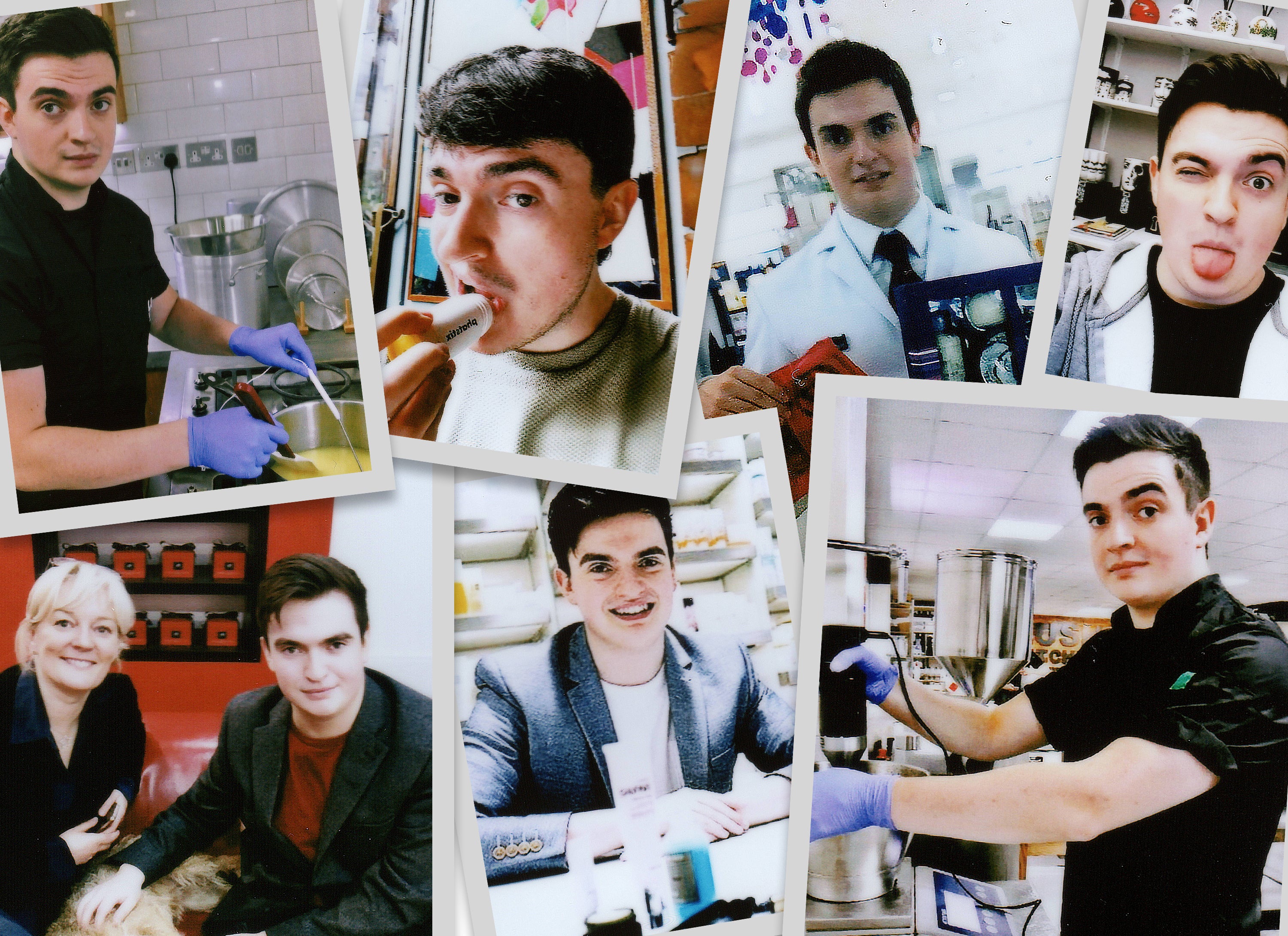
Thom Watson is the founder of Phatstix and the only person behind TJ Double You Ltd, the company that makes it. He started in beauty at 16 and has spent nearly two decades in the industry, including a spell at The Body Shop, where he worked with the shea cooperatives that supply this brand. He founded MANFACE, a men's skincare publication, in 2011. He trained as a beauty therapist and has a master's in Psychology. He has eczema, which is how all this started.
The Balm is double award-winning. At the Beauty Shortlist Awards 2025 it won Editor's Choice and was a finalist for Best Men's Multi-Tasking Product.
As featured in: Tatler · Vogue · GQ
Phatstix is based in England. The formula was developed in York with Here2Grow and it is manufactured in Lincolnshire. hello@phatstix.net
Questions people actually ask
Is Phatstix really seven times bigger than a normal lip balm?
Yes. The Balm is 30g and a standard lip balm is about 4.25g. That makes it 7.06 times bigger. One stick lasts up to a year.
What is The Balm made of?
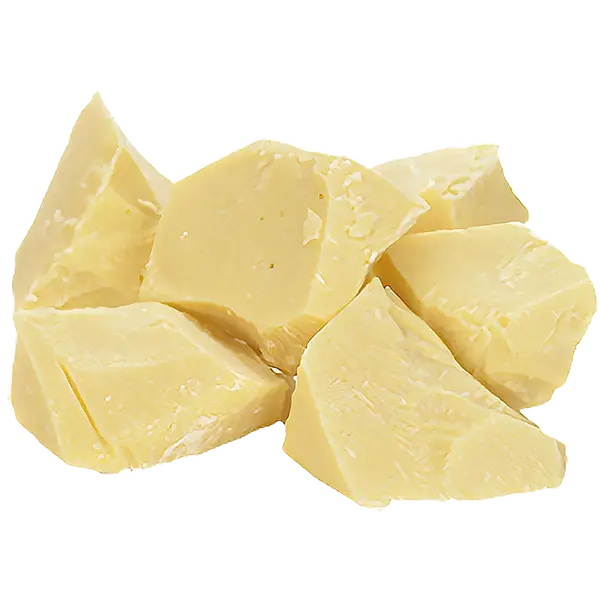
Nine ingredients: white beeswax, sunflower seed oil, jojoba oil, sweet almond oil, grapeseed oil, raspberry seed oil, shea butter, cocoa butter and mango butter. No water, no fragrance, no artificial preservatives, no petrochemicals. 100% natural.
Is Phatstix vegan?
No. The Balm and both tints contain beeswax, which is animal-derived. Everything else is plant-based. Phatstix is not tested on animals.
What are the tints made of, and are they natural?
The tints use the same butter-and-oil base as The Balm, plus a castor-oil pigment carrier and a small amount of cosmetic-grade colour, assessed as safe by an independent safety assessor. We won't call them 100% natural, because they aren't, but the base is the same and the pigment is a deliberate choice.
Does Phatstix contain SPF?
No. None of the three contain SPF or any sun-protection ingredient. If you want SPF on your lips, use a product with a verified rating.
Is it suitable for eczema-prone skin?
The Balm exists partly because I have eczema and couldn't find one that worked for me. That is a personal account, not a medical claim. It is a cosmetic, not a treatment. If you have a skin condition, use your judgement and ask a GP or dermatologist if you're unsure.
Where is Phatstix made?
Formulated and manufactured in England. The formula was developed in York with Here2Grow, a doctor-led cosmetic lab, and it is manufactured in Lincolnshire. The shea butter comes from Ghanaian women's cooperatives.
Why is the tube plastic?
We chose the twist-up stick deliberately. The alternatives look better than they are: aluminium is energy-intensive, refillables break and leach in practice, and paper packaging usually needs a plastic liner to protect the formula. The honest end-of-life story is that the sleeve is recyclable cardboard and the tube is a mix of plastics, so it is not widely recycled at kerbside, though some stores run cosmetic-packaging take-back schemes. One balm lasting a year replaces roughly seven to twelve small tubes, so you use less plastic overall. The tube isn't perfect and we're not going to pretend otherwise.
Has anyone actually tested it?
Yes. In a consumer trial of 34 people, all self-reported: 100% saw an improvement in dry, flaky or chapped skin, and 82% would buy it again, with nobody saying no. Those figures are for The Balm. Self-reported consumer trial, 34 participants, January 2026. Not a clinical study.